Recently I received a Bluevua ROPOT countertop reverse osmosis (RO) water filtration unit. The unit wasn’t new, it was already a few years old when I received it, but functional. Whenever I receive something used, I’ll generally perform an inspection, cleaning, and replace anything necessary - basically a DIY refurbishment.
In the case of the Bluevua ROPOT, I performed a basic cleaning to start. The built in display on the unit showed the existing filters as being close to expiry, so I order a set of replacement filters, along with a cleaning kit consisting of chlorine dioxide tablets and bypass plugs that allow running solution through the system without filters installed.
Upon receiving these items, I removed the old filters and used the byplass plugs to first run a descaling solution. I didn’t purchase Bluevua’s descaling powder - I already had a descaling product on hand that I purchased for my coffee machine, though nowadays I realize that descaling products are basically just citric acid which I already keep for food applications so when I run out I won’t be buying more of the specialized descaling products. After a rinse, I followed up with the chlorine tablet, more rinses, and finally installed the new filters.
Everything was fine for a couple days. Then the unit simply stopped working. Pressing the button to start filtering resulted in nothing happening. Tried everything I could before taking it apart, but there weren’t many things to try besides power cycling and resetting the filter life counter again. So it was on to taking it apart and figuring out where the issue was.
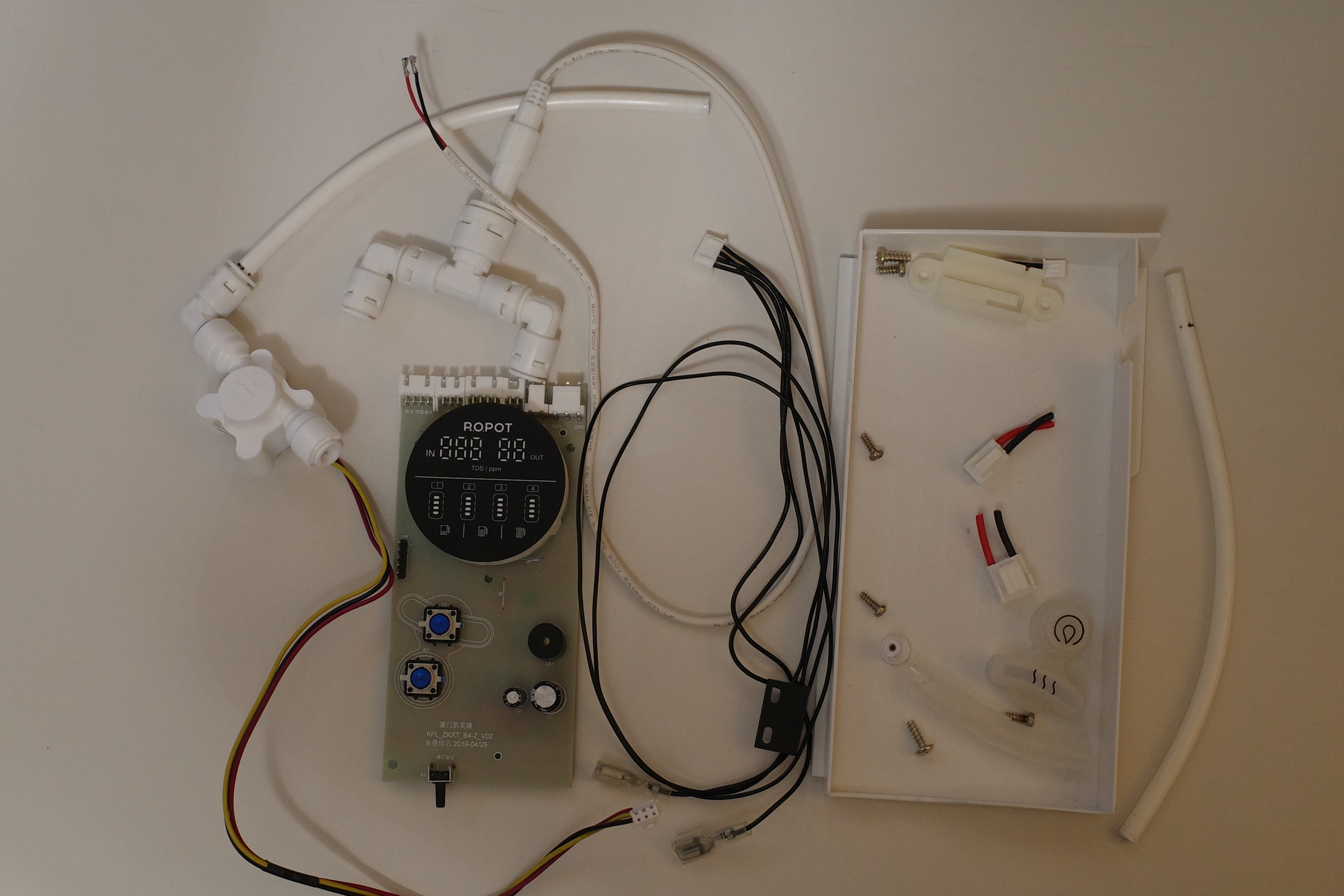
There are actually quite a number of components in the unit not critical to the basic functionality. The unit displays total dissolved solids (TDS) counts on both the input water and output water requiring two conductance meters. A flow meter on the output is used to allow the filtering to automatically shut off after a certain about of water has been filtered (the unit has a function to choose between a few different volumes). There’s also a pressure sensor on the output which I believe is used to automatically shut the pump off if there is high back-pressure. Since the carafe presses in a mechanic valve on the unit to allow filtered water output, if the carafe is not installed the pressure would increase and the unit could detect that. Another sensor is used to verify the presence of the tank for input/waste water, this time using a magnetic reed switch and a magnet on the tank.
I tried bypasses the pressure sensor switch in both open or closed states, in case the sensor was the issue preventing the unit from functioning, but no luck. I also did the same for the tank presence switch with the same result. What remained was the main control board, 24v pump, and two other devices with less clear purposes, one marked “Nerowater 24v 200mA 0.8MPa 8sec” and the other “300cc 5w 24v”. The “Nerowater” device was wired in parallel to the main pump, and the other had an independent connection to the control board.
When trying to activate the system, the device did not apply voltage to the main pump. I tried bypassing the control board and applying 24v directly to the pump and “Nerowater” device, which seemingly worked perfectly. So apparently the main control board was at fault, either the microprocessor had borked itself or transistor for switching the pump had failed. I decided to proceed with the simplest fix I could. I wired the main power switch on the back of the unit directly to the main pump and “Nerowater” device using some Wago connectors so it would run for as long as the switch was on.
The “300cc 5w 24v” is the last thing to figure out. This seems to function as the flow restrictor forcing water through the RO filter, but when power is supplied the flow restriction stops allowing water to pass over the intake side of the RO filter. This must be for the automatic back flush feature of the ROPOT, which automatic runs on some interval. I ended up just wiring in a push button switch to perform this function when held down and the system is on. I managed to shove it through one of the existing button openings.
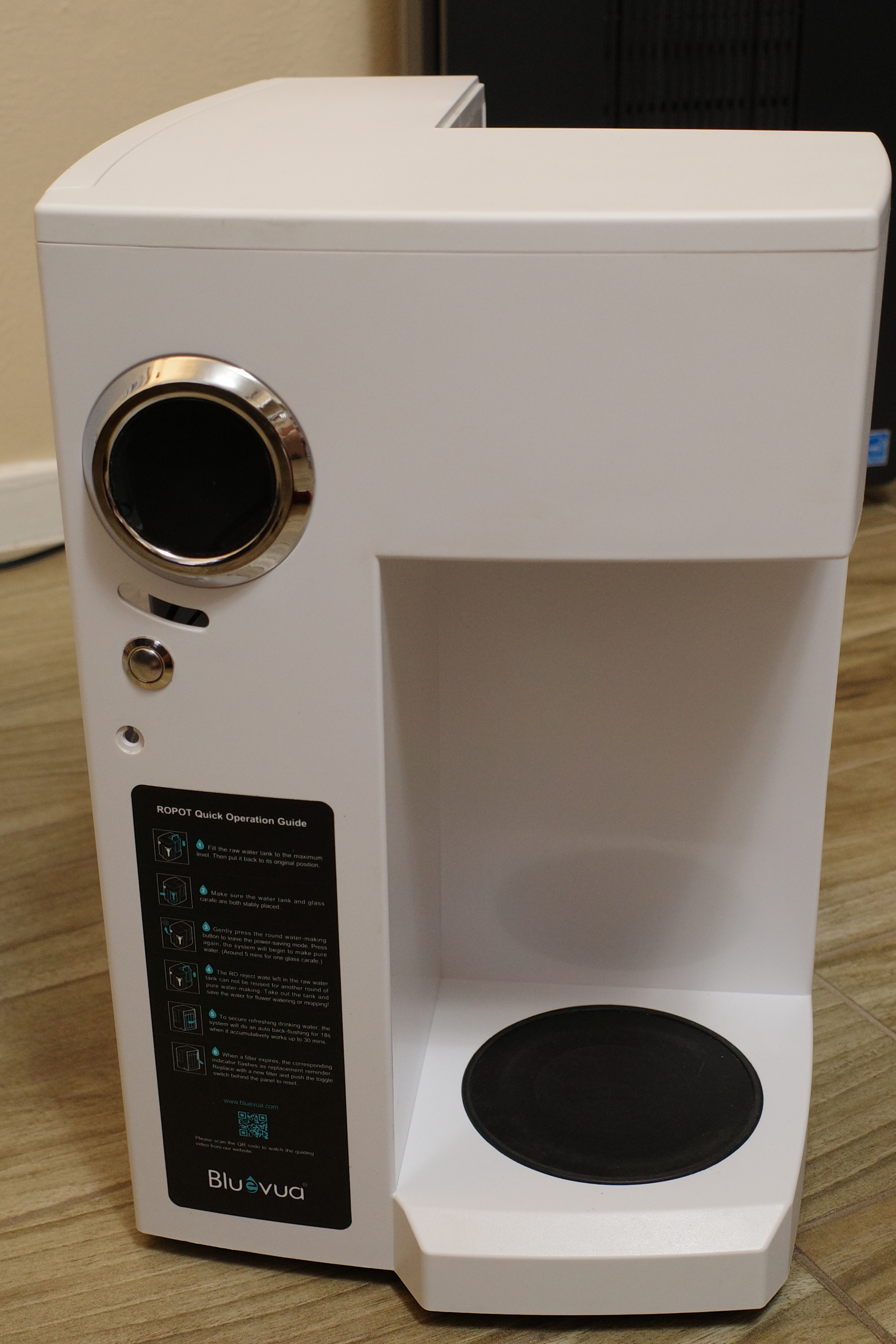
A bunch of minor “value add” type features introduced failure points leading a few hundred dollar device to no longer function when nothing actually critical was broken. I ended up tearing out the main control board, flow meter, tank detection switch, and one of the TDS sensors without losing anything I cared about. Here’s what the unit looks like now:
And everything I took out:
Funnily enough, one of the lost features has become a net positive for me. Because the system no longer automatically switches off when the carafe is full, I’m stuck in the vicinity of my kitchen for a few minutes a few times a day when I run the filter. This gives me an opportunity to spend a few minutes on dishes/cleaning, which has done wonders in preventing me from allowing dishes to pile up.